You Won’t Believe What These Hillside Homes in Ella, Sri Lanka Look Like
Nestled in the misty highlands of Sri Lanka, Ella is more than just a scenic escape—it’s a design lover’s dream. As I wandered through tea-covered hills and cool mountain air, I was stunned by the unique architecture blending colonial charm with modern eco-style. These hillside homes aren’t just beautiful—they tell a story. If you're craving travel inspiration that combines nature, culture, and jaw-dropping design, Ella’s architectural vibe is pure magic waiting to be explored.
First Impressions: Arriving in Ella and the Visual Impact of Its Architecture
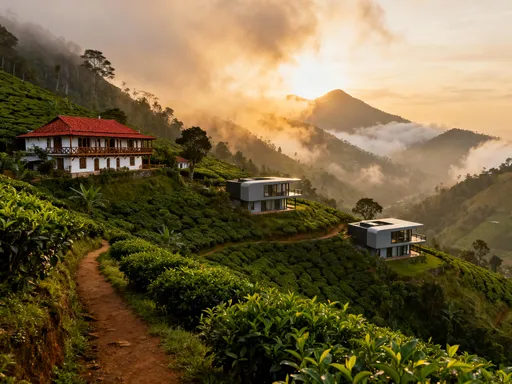
The journey to Ella begins with one of the most breathtaking train rides in the world—winding from Kandy through emerald-green highlands, past waterfalls and cascading tea plantations. As the train slows into Ella, passengers lean toward the windows, captivated by the sight of homes clinging to steep slopes like natural extensions of the land. These structures don’t dominate the landscape—they complement it. Built into the contours of the hills, they rise in staggered layers, their rooftops often hidden beneath a soft blanket of mist. The first glimpse evokes a sense of wonder: How do they stand so gracefully on such inclines? What stories do these walls hold?
What strikes visitors immediately is the harmony between architecture and environment. Unlike urban developments that reshape terrain, Ella’s homes adapt to it. Stilted foundations, sloped roofs, and terraced gardens follow the natural gradient, minimizing environmental disruption. Many buildings use local stone for lower walls and timber for upper frames, materials that age gracefully in the humid mountain climate. The color palette is equally thoughtful—earthy browns, soft whites, and mossy greens that blend with the surrounding foliage. Even newer constructions respect this visual language, avoiding bright or artificial hues that might clash with the setting.
The architectural diversity reflects Ella’s layered history. You’ll see remnants of traditional Kandyan village homes, modest in size but rich in craftsmanship, alongside British-era bungalows with wide verandas and tall windows. In recent years, boutique guesthouses and eco-lodges have emerged, reinterpreting local design with modern comfort. Yet, despite this evolution, there’s a consistent thread: a deep respect for place. Each structure feels intentional, as though its builders asked not just where to build, but how to belong.
Colonial Echoes: The Lingering Style of British-Era Bungalows
Among the most distinctive features of Ella’s built environment are the surviving colonial bungalows, echoes of Sri Lanka’s British plantation era. Constructed in the late 19th and early 20th centuries, these homes were originally built for tea estate managers who oversaw the sprawling plantations blanketing the hills. Designed for comfort in a tropical highland climate, they feature pitched roofs to shed heavy monsoon rains, deep overhanging eaves to shade windows, and wide wraparound verandas that invite outdoor living. Tall, louvered windows promote cross-ventilation, allowing cool air to circulate naturally—a necessity before the age of air conditioning.
Today, many of these bungalows have been thoughtfully restored and repurposed as guesthouses, cafes, or cultural centers. One such example, a well-preserved structure near the iconic Nine Arches Bridge, stands as a testament to enduring craftsmanship. Its timber frame remains solid, its hardwood floors polished by decades of footsteps, and its original fireplaces still intact. The interior layout—spacious rooms opening onto verandas—creates a seamless flow between indoors and outdoors, a design principle now celebrated in modern sustainable architecture.
What makes this colonial style particularly suited to Ella is not just its aesthetic appeal, but its functional intelligence. The elevated foundations protect against dampness and flooding, while the orientation of the buildings often maximizes sunlight and panoramic views. Thick walls made of brick and plaster provide thermal mass, keeping interiors cool during the day and warm at night. These are not relics frozen in time, but living examples of climate-responsive design. Their continued use shows how historical architecture, when maintained with care, can meet contemporary needs without losing its soul.
Local Roots: Traditional Sri Lankan Design Elements Still in Use
Beyond colonial influences, Ella’s architecture is deeply rooted in indigenous Kandyan traditions—a style shaped by centuries of living in harmony with the mountainous landscape. Traditional Kandyan homes are characterized by steeply pitched roofs made of clay tiles or thatch, designed to handle Sri Lanka’s intense seasonal rains. The roofs extend far beyond the walls, creating shaded areas that serve as outdoor living spaces—perfect for relaxing, socializing, or enjoying meals in the cool of the evening. These homes often feature open courtyards or central atriums that promote airflow and bring natural light deep into the interior.
The materials used are almost entirely local: timber from sustainably managed forests, stone quarried from nearby hills, and clay for roofing tiles. Walls are sometimes constructed using wattle and daub—a technique involving woven bamboo filled with mud and lime—which provides excellent insulation. Doors and windows are intricately carved with floral or geometric patterns, each piece a small work of art reflecting the skill of local artisans. Even today, many builders in Ella continue to employ these methods, either in full traditional homes or by integrating key elements into modern designs.
What’s especially meaningful is how these architectural features support a particular way of life. The open layout encourages family interaction and connection with nature. Large verandas function as transitional spaces where daily activities spill outdoors—children play, elders chat, meals are prepared. Natural ventilation reduces reliance on artificial cooling, aligning with a lifestyle that values simplicity and sustainability. In a world increasingly dominated by sealed, air-conditioned environments, Kandyan design offers a refreshing alternative: homes that breathe, both literally and metaphorically.
Thankfully, the knowledge behind these traditions is not disappearing. Local craftspeople—woodcarvers, masons, roof tilers—continue to pass down their skills through apprenticeships and family workshops. Some community-led initiatives even offer cultural tours where visitors can observe traditional building techniques in action. This continuity ensures that Ella’s architectural identity remains authentic, not a curated version for tourists, but a living expression of cultural resilience.
The Rise of Eco-Chic: Modern Guesthouses and Sustainable Design Trends
In recent years, Ella has seen a surge in eco-conscious accommodations that blend modern design with environmental responsibility. These boutique guesthouses and retreats represent a new chapter in hillside architecture—one that honors the past while embracing innovation. Glass walls, green roofs, solar panels, and rainwater harvesting systems are now common features. Yet, despite their contemporary elements, these structures maintain a low visual impact, often blending into the terrain with natural materials and earth-hugging forms.
One popular eco-retreat in the area, widely recognized for its minimalist yet warm aesthetic, exemplifies this trend. Built on stilts to minimize soil disturbance, it uses reclaimed timber, recycled steel, and locally sourced stone. Large glass windows frame uninterrupted views of tea fields and distant peaks, creating a sense of immersion in nature. The roof is partially covered with vegetation, helping to insulate the building and support local biodiversity. Solar energy powers lighting and heating, while composting toilets and greywater systems reduce environmental strain. Despite its modern amenities, the space feels serene and grounded—a sanctuary rather than a spectacle.
What sets these eco-lodges apart is their philosophy: architecture as a form of stewardship. Designers prioritize passive cooling, natural light, and minimal waste, ensuring that comfort doesn’t come at the expense of the environment. Interiors are furnished with handmade textiles, hand-carved furniture, and organic materials, reinforcing a connection to local culture. Guests often describe the experience as transformative—not just because of the views, but because of how the space makes them feel: calm, present, and deeply connected to their surroundings.
These developments reflect a broader shift in travel preferences. More visitors, especially those aged 30 to 55, seek meaningful, sustainable experiences over luxury for its own sake. They want to stay in places that reflect local identity and ecological care. In Ella, this demand has inspired a new generation of architects and hosts who see design as a way to protect, not exploit, the natural beauty around them.
Why Ella’s Architecture Stands Out: A Fusion of Culture, Climate, and Creativity
What makes Ella’s architecture truly exceptional is not any single style, but the way it weaves together history, environment, and human ingenuity. Unlike many tourist destinations where development follows generic templates, Ella’s buildings respond to specific conditions: steep slopes, heavy rainfall, cool temperatures, and a rich cultural legacy. This necessity has bred creativity. Builders can’t simply replicate flat-land designs—they must adapt, innovate, and listen to the land.
The result is a layered architectural identity. Colonial bungalows speak to a complex past, yet their practical features remain relevant. Traditional Kandyan homes demonstrate time-tested solutions for living comfortably in harmony with nature. Modern eco-lodges take these lessons further, integrating technology and sustainability without sacrificing beauty. Together, they form a visual narrative of resilience and adaptation—one that feels both authentic and forward-looking.
Compared to other South Asian hill stations—like Darjeeling in India or Nuwara Eliya, Sri Lanka’s own colonial-era retreat—Ella stands out for its intimate scale and organic growth. There’s no rigid grid of streets or grandiose public buildings. Instead, development has occurred incrementally, often driven by small family-run guesthouses and community projects. This bottom-up approach has preserved a sense of authenticity that larger, more commercialized destinations sometimes lack.
Equally important is the role of visual harmony. Architects and homeowners alike seem to intuitively understand that in a place this beautiful, the building should never compete with the view. Colors are muted, forms are gentle, and scale is human. Even newer constructions avoid glass towers or flashy designs. The emphasis is on integration—on creating spaces that feel like they’ve always belonged. This restraint is not a limitation, but a strength. It allows the landscape to shine while offering shelter that feels personal, peaceful, and deeply rooted.
Traveler’s Guide: How to Experience Ella’s Architecture Like a True Explorer
To fully appreciate Ella’s architectural charm, slow down and explore on foot. Begin with a morning walk through the village center, where colonial bungalows stand beside family homes with red-tiled roofs and flower-filled gardens. Follow narrow pathways that climb into the hills—some unpaved, others lined with stone steps—leading to guesthouses tucked among tea bushes and towering eucalyptus trees. One recommended route takes you from Ella town toward Little Adam’s Peak, offering changing perspectives of homes perched on ridges, their silhouettes softened by morning mist.
For a deeper immersion, consider staying in a heritage-style bungalow or an eco-friendly retreat. These accommodations do more than provide a place to sleep—they offer a lived experience of local design. Waking up to sunlight filtering through wooden louvers, sipping tea on a veranda overlooking misty valleys, or feeling the coolness of stone floors underfoot—these sensory details bring architecture to life in ways photos cannot capture.
Photography enthusiasts will find endless inspiration, especially during golden hours. Early morning light casts a soft glow on rooftops and stone walls, while afternoon mists create dreamlike scenes, turning homes into silhouettes against cloudy skies. When photographing private residences, always be respectful—avoid intrusive angles and ask permission if approaching closely. Many homeowners are happy to share stories about their homes if approached with kindness and curiosity.
Transportation itself offers unique vantage points. The train journey into Ella provides panoramic views of hillside structures nestled into impossible slopes. A tuk-tuk ride through back roads reveals hidden homes, family-run tea stalls, and artisans at work. For the adventurous, hiking trails like the one to Ella Rock pass through clusters of traditional homes, where you might glimpse a woodcarver at his bench or a woman arranging marigolds at her doorstep. Each mode of travel reveals a different layer of Ella’s architectural soul.
Conclusion: Architecture as a Gateway to Deeper Travel
Ella’s hillside homes are more than just places to stay—they are invitations to see, feel, and understand a place more deeply. Each building, whether a century-old bungalow or a modern eco-lodge, carries the imprint of its environment and the values of those who built it. They reflect a way of living that prioritizes balance: between tradition and innovation, comfort and sustainability, beauty and function.
For travelers, especially those seeking meaningful, enriching experiences, these homes offer a powerful lesson. True discovery doesn’t come only from checking off landmarks, but from noticing the details—the curve of a roof, the grain of wooden beams, the way light enters a room. Architecture, when done with care and intention, becomes a language. It tells us how people have learned to live with the land, how they honor their past, and how they imagine the future.
As you plan your next journey, let Ella inspire you to look beyond the obvious. Seek out destinations where design tells a story. Choose stays that connect you to local culture and ecology. And remember: the most memorable travels are not just about where you go, but how you experience it. Let every wall, every window, every step into a hillside home remind you that beauty, history, and belonging are built—literally—into the places we visit. Let your next adventure be one where architecture leads the way.